Radical Social Theory: An Appraisal, A Critique, and an Overcoming: Notes on Olympe de Gouges

Radical Social Theory: An Appraisal, A Critique, and an Overcoming
Notes on Olympe de Gouges
  • Show the following:

    Annotations
    Resources
  • Adjust appearance:

    Font
    Font style
    Color Scheme
    Light
    Dark
    Annotation contrast
    Low
    High
    Margins
  • Search within:
    • Notifications
    • Privacy
  • Project HomeRadical Social Theory
  • Projects
  • Learn more about Manifold

Notes

table of contents
  1. Cover
  2. Front Matter
    1. Table Of Contents
    2. Title and Authors
    3. Copyright and License
    4. Dedication
  3. Introduction
  4. Chapter One - Liberalism and Eurocentrism
    1. Notes on Jean Jacques Rousseau
    2. The Social Contract (excerpts)
    3. Notes on Eurocentrism
    4. Lecture: Liberalism and Eurocentrism, Jean Jacques Rousseau
    5. Main Elements of Liberalism
    6. Liberalism and Eurocentrism Exercises
    7. Shirley Temple A Kid 'in' Africa: An Illustrated Summary and Critique
    8. Readings and Resources
    9. Notes on Angela Davis
  5. Chapter Two - Early Liberal Feminism Contrasted with Black Feminism
    1. Notes on Olympe de Gouges
    2. The Declaration of the Rights of Women
    3. Lecture: Early Liberal Feminism, Olympe De Gouges
    4. Olympe de Gouges Exercises
    5. Main Contributions De Gouges
    6. Readings and Resources
  6. Chapter Three - Communism, Karl Marx
    1. Notes on Karl Marx
    2. The Communist Manifesto
    3. Lecture: Communism, Karl Marx, Part 1
    4. Lecture: Communism, Karl Marx - Part 2
    5. Basic Definitions of Marxian Concepts
    6. Main Elements of Marxism
    7. Marx Exercises
    8. Readings and Resources
  7. Chapter Four - Anarcho-Communism, Pyotr Kropotkin
    1. Notes on Kropotkin
    2. The Conquest of Bread
    3. Lecture: Anarcho-Communism, Pyotr Kropotkin
    4. "The Conquest of Bread" Exercises
    5. Main Elements of Anarcho-Communism
    6. Readings and Resources
  8. Chapter Five - Death of the Western God
    1. Notes on Friedrich Nietzsche
    2. Thus Spoke Zarathustra (excerpt)
    3. Lecture: Death of the Western God, Friedrich Nietzsche
    4. Basic Definitions of Nietzsche's Main Concepts
    5. Nietzsche Exercises
    6. Readings and Resources
  9. Chapter Six - Black Self-Determination and Self-Defense
    1. Notes on Malcolm X
    2. The Ballot or the Bullet Speech
    3. Lecture: Black Self-Determination and Self-Defense, Malcolm X
    4. The 10-Point Program of the Black Panther Party
    5. Malcolm X Exercises
    6. The Ten Point Program and Platform of the Black Student Unions
    7. Readings and Resources
  10. Chapter Seven - Love and Executions
    1. Notes on The Cuban Revolution
    2. Notes on Che Guevara
    3. Lecture: Love and Guns, Che Guevara
    4. Love and Guns (Che Guevara) Exercises
    5. Readings and Resources
    6. Che Guevara Basic Definitions of Main Concepts
  11. Chapter Eight - Feminism is for Everybody
    1. Notes on bell hooks
    2. Lecture: Feminism is for Everybody, bell hooks
    3. Trayvon Martin news video
    4. bell hooks Exercises
    5. bell hooks Takeaway
    6. Readings and Resources
  12. Chapter Nine - Cultures, Queerness, and Ethnicity
    1. Notes on Gloria Anzaldúa
    2. Lecture: Cultures, Queerness, and Ethnicity, Gloria Anzaldúa
    3. La Conciencia de la Mestiza Exercises
    4. Gloria Anzaldua Takeaways
    5. Readings and Resources
  13. Chapter Ten - Postmodern, Postcolonial Revolution
    1. Notes on the Zapatistas
    2. Lecture: Postmodern, Postcolonial Revolution, The Zapatistas
    3. The Zapatistas Exercise
    4. Zapatistas Takeaways
    5. Readings and Resources
  14. Chapter Eleven: Final Exercises
    1. Final Exercise #1: "The diverse"
    2. Final Exercise #2: "Somos Una Gente: Sisterhood and Brotherhood"
    3. Final Exercise #3: Contrasting Power Structures
    4. Final Exercise #4: "Symbolism: Communicating Outside the Box"
    5. Final Exercise #5: "Marxism, Feminism, and Black Liberation"
    6. Final Exercise #6: "Creating and Becoming"
    7. Final Exercise #7: "Feminisms"
    8. Final Exercise #8: "Born in Chains: 'Freedom' in Liberalism and Marxism"
    9. Final Exercise #9: "Changing the History of Change"
    10. Final Exercise #10: "Future Feminisms"
    11. Final Exercise #11: "Self-Defense, Automony, and Revolution"
  15. Angela Davis Notes

Notes on Olympe de Gouges

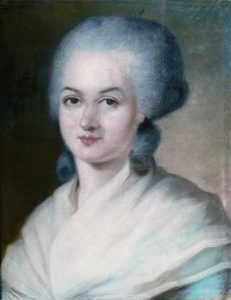
Painted portrait of Olympe de Gouges from head to chest starting at viewer. De Gouge is wrapped in a shawl and is against a plain background.
Olympe de Gouges 1748- 1793
Early Life
  • Born with the name Marie Gouze
  • Middle-class family. Her father was a butcher and her mother was a daughter of a cloth merchant.
  • Believed she was the illegitimate daughter of a nobleman
  • Forced into a marriage of convenience. Her husband died one year after the birth of her only son.
  • Moves to Paris, changes name and meets a wealthy lover. Other lovers followed
  • Very well connected with Paris’ intellectual revolutionary scene

Abolitionist- Feminist

  • In 1784, De Gouges wrote Zamore and Mirza against slavery and later “Black Market”
  • Wrote about and advocated for “free love”
  • Wrote the Declaration of the Rights of Woman and the Female Citizen, in response to the Declaration of the Rights of Man

Jacobins and Girondins

  • Close with Girondins, opposed Jacobins
  • Against execution of Louis XVI
  • Her friends are guillotined
  • De Gouges calls for a plebiscite. She includes constitutional monarchy among options
  • She condemns “The Terror”
  • She is executed in 1793

“Oh women! Women, when will you cease to be blind? What advantages have you gathered in the Revolution?” – Olympe De Gouges

Media Attributions

  • Olympe De Gouge © Alexandre Kucharsk is licensed under a Public Domain license

Annotate

Next Chapter
The Declaration of the Rights of Women
PreviousNext
Copyright © 2020 by Graciela Monteagudo. Radical Social Theory: An Appraisal, A Critique, and an Overcoming by Graciela Monteagudo is licensed under a Creative Commons Attribution-NonCommercial 4.0 International License, except where otherwise noted.
Powered by Manifold Scholarship. Learn more at
Opens in new tab or windowmanifoldapp.org