How to Learn Like a Pro!: GRAPHIC ORGANIZERS for Reading/Writing Patterns

How to Learn Like a Pro!
GRAPHIC ORGANIZERS for Reading/Writing Patterns
  • Show the following:

    Annotations
    Resources
  • Adjust appearance:

    Font
    Font style
    Color Scheme
    Light
    Dark
    Annotation contrast
    Low
    High
    Margins
  • Search within:
    • Notifications
    • Privacy
  • Project HomeCharting Your First Semester
  • Projects
  • Learn more about Manifold

Notes

table of contents
  1. Cover
  2. Title Page
  3. Copyright
  4. Table Of Contents
  5. Learn Like a Pro! Welcome to Effective Learning (EL115)--for Students and Instructors
  6. Acknowledgments
  7. Unit 1 Overview--Learning Styles and Preferences; Unit Terms
    1. Lesson 1.1: The Three Learning Styles
    2. Lesson 1.2: Visual Learning
    3. Lesson 1.3: Auditory Learning
    4. Lesson 1.4: Kinesthetic Learning
    5. Lesson 1.5: The Brain Dominance Theory
    6. Lesson 1.6: Howard Gardner's Multiple Intelligences Theory
    7. To the Instructor: Optional Assignments/Activities/Extra Credit Opportunities for Unit 1
  8. Unit 2 Overview--Management of Time, Tools, and Study Environment; Unit Terms
    1. Lesson 2.1: World View and Self Efficacy
    2. Lesson 2.2: Procrastination
    3. Lesson 2.3: Schedules and Scheduling
    4. Lesson 2.4: Graphic Organizers and Study Cards
    5. Lesson 2.5: Study Areas and Study Groups
    6. To the Instructor: Optional Assignments/Activities/Extra Credit Opportunities for Unit 2
  9. Unit 3 Overview--College Level Critical Thinking and Reading; Unit Terms
    1. Lesson 3.1: Comprehending College Level Reading by Using the Reading Apprenticeship Approach
    2. Lesson 3.2: Getting the Most Out of Your Textbooks
    3. Lesson 3.3: Patterns and Context Clues
    4. Lesson 3.4: Close Reading for Literature
    5. Lesson 3.5: Math and Science--Tips for Better Comprehension and for Studying
    6. To the Instructor: Optional Assignments/Activities/Extra Credit Opportunities for Unit 3
    7. RUBRIC FOR THE TAKE-HOME MID-TERM PORTFOLIO PROJECT DUE AFTER THE COMPLETION OF UNITS 1-3
  10. Unit 4 Overview--Listening and Note-Taking; Unit Terms
    1. Lesson 4.1: Note-Taking Part 1, Listening
    2. Lesson 4.2: Note-Taking Part 2, Key Information and Formats
    3. To the Instructor: Optional Assignments/Activities/Extra Credit Opportunities for Unit 4
  11. Unit 5 Overview--Memory Principles and Techniques; Unit Terms
    1. Lesson 5.1: Memory Model and Techniques
    2. Lesson 5.2: Memory as We Age
    3. To the Instructor: Optional Assignments/Activities/Extra Credit Opportunities for Unit 5
  12. Unit 6 Overview--Test-Taking: Pre, Mid, and Post; Unit Terms
    1. Lesson 6.1: Pre- Mid- and Post-Test-Taking Strategies
    2. Lesson 6.2: Handling Test Anxiety
    3. Lesson 6.3: Understanding Test Items
    4. To the Instructor: Optional Assignments/Activities/Extra Credit Opportunities for Unit 6
    5. RUBRIC FOR THE TAKE-HOME FINAL PORTFOLIO PROJECT DUE AFTER COMPLETION OF UNITS 4-6
  13. GRAPHIC ORGANIZERS for Reading/Writing Patterns
  14. OUTSIDE OF THE TEXT RESOURCES: Complete Lane Study Tips Articles List and Link to PDF File

1

GRAPHIC ORGANIZERS for Reading/Writing Patterns

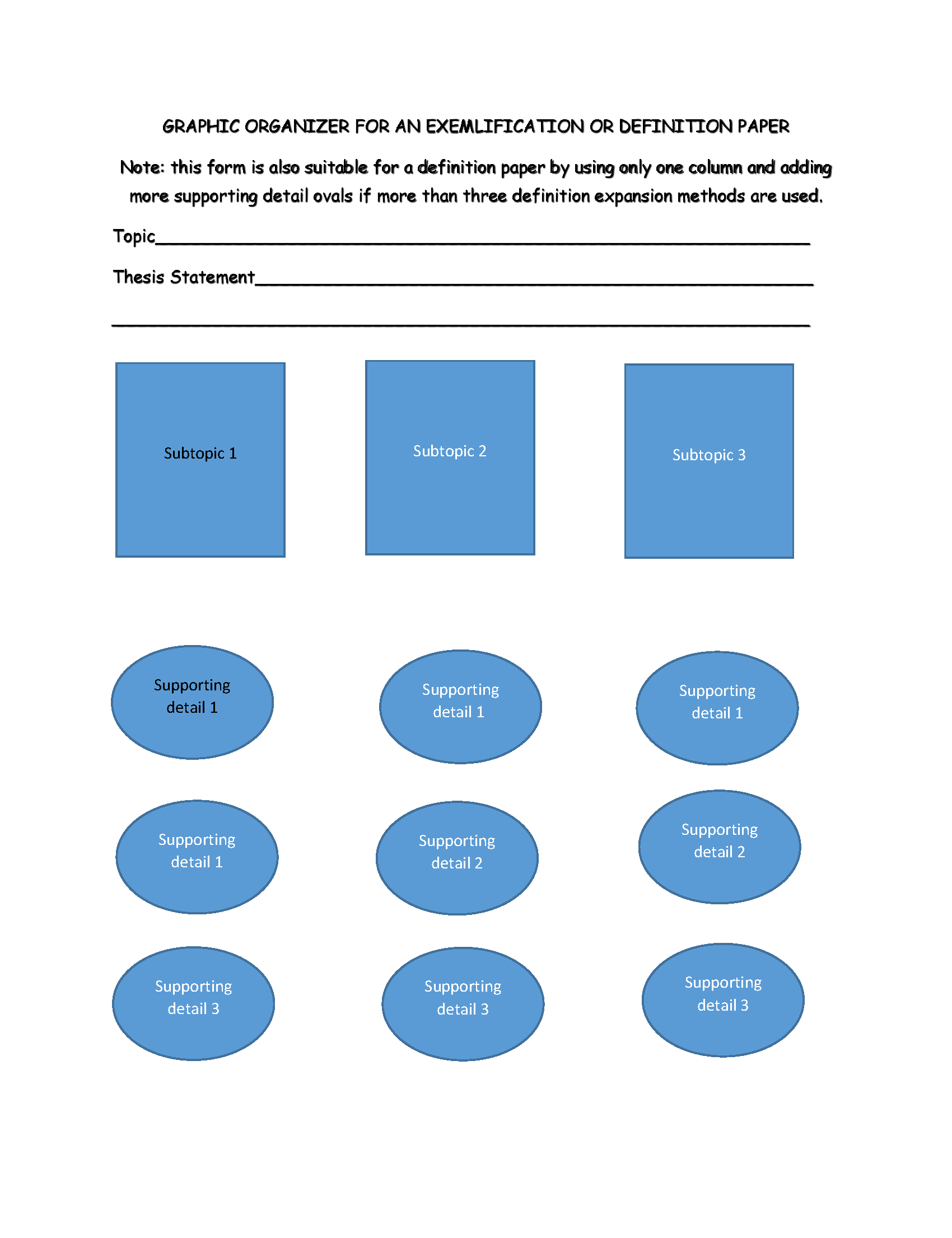
Graphic Organizer for Exemplification or Definition Papers for Lesson 2.4

this form is also suitable for a definition paper by using only one column and adding more supporting detail ovals if more than three definition expansion methods are used. What is your topic? What is your thesis statement? Below are three boxes for subtopics. Under each box for a subtopic is space for 3 supporting details.
Click on the thumbnail for a full-size view.

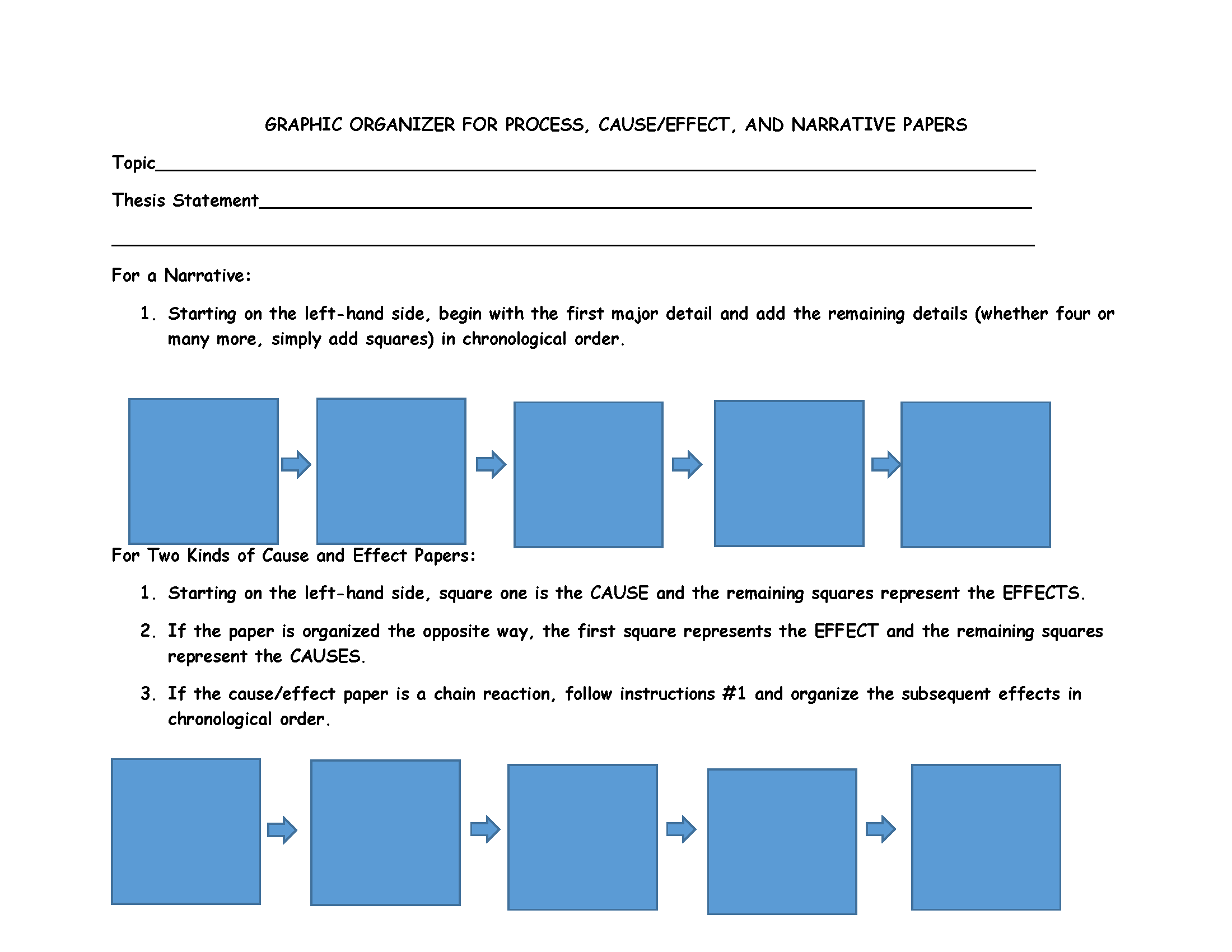
For Lesson 2.2 Graphic Organizer for Narrative, Process, and Cause and Effect Papers

What is your thesis? What is your topic statement? For a Narrative: 1. Starting on the left-hand side, begin with the first major detail and add the remaining details (whether four or many more, simply add squares) in chronological order. For Two Kinds of Cause and Effect Papers: 1. Starting on the left-hand side, square one is the CAUSE and the remaining squares represent the EFFECTS. 2. If the paper is organized the opposite way, the first square represents the EFFECT and the remaining squares represent the CAUSES. 3. If the cause/effect paper is a chain reaction, follow instructions #1 and organize the subsequent effects in chronological order.
Click on the thumbnail for a full-size view.

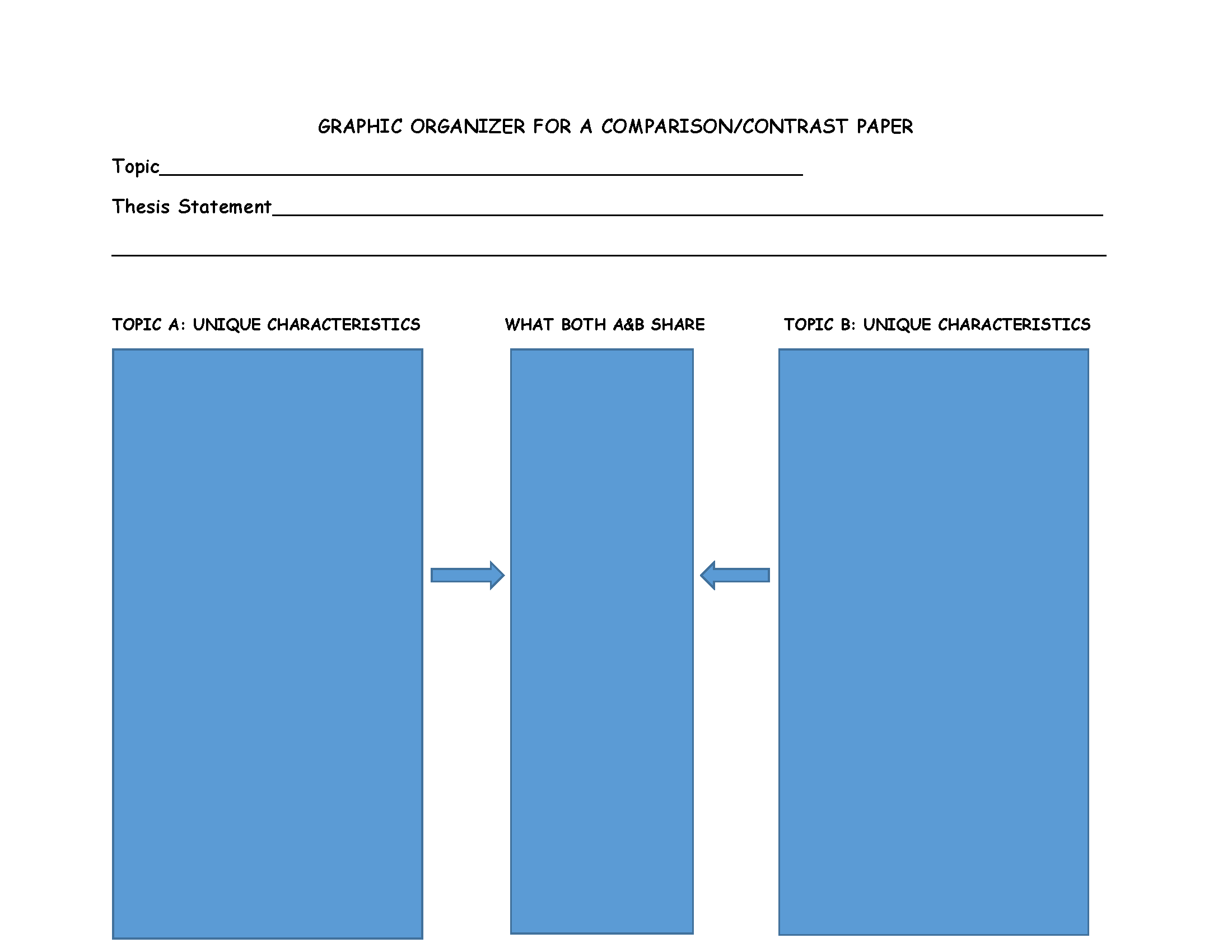
2.3 Graphic Organizer for a Comparison and Contrast Paper

What is your topic? What is your thesis statement? What are the unique characteristics of Topic A? What are the unique characteristics of Topic B? What do both A & B share?
Click on the thumbnail for a full-size view.

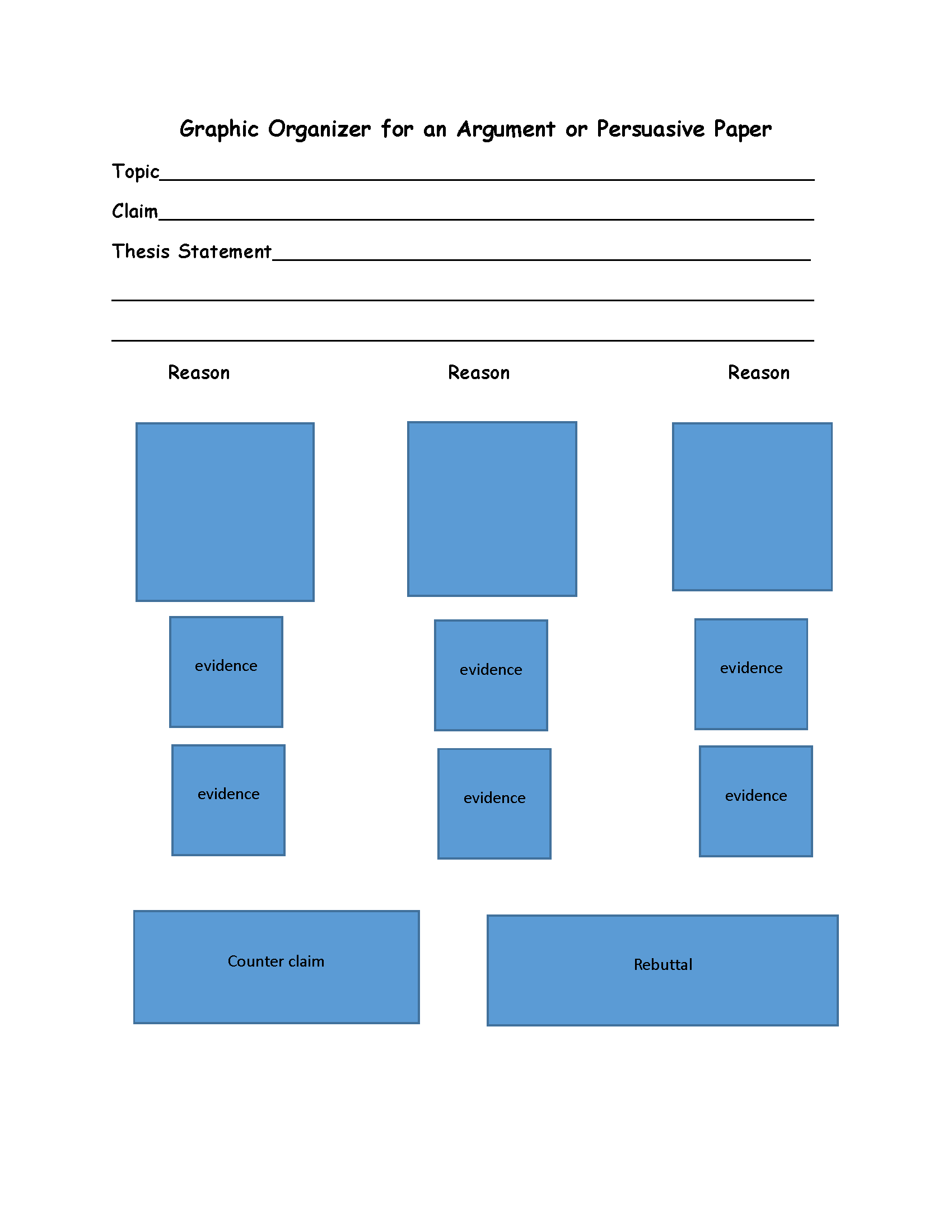
2.4 Graphic Organizer for an Argument or Persuasive Paper

What is your topic? What is your claim? What is your thesis statement? Below are three boxes for different reasons. Below each reason box are two boxes for evidence. At the bottom is a box for Counter claim and a box for Rebuttal.
Click on the thumbnail for a full-size view.

Annotate

Next chapter
OUTSIDE OF THE TEXT RESOURCES: Complete Lane Study Tips Articles List and Link to PDF File
PreviousNext
Making College Happen: College Success Guides (and more)
Copyright © 2016 by Phyllis Nissila. How to Learn Like a Pro! by Phyllis Nissila is licensed under a Creative Commons Attribution 4.0 International License, except where otherwise noted.
Powered by Manifold Scholarship. Learn more at
Opens in new tab or windowmanifoldapp.org