About This Module
Where Module 1 examined how institutions make race, Module 2 assembled the theories for analyzing it, and Module 3 traced systemic racism through ostensibly race-neutral systems, Module 4 turns to the ground on which that order stands: place. The module works in the tradition of Black geographies — the field that asks how racial orders are spatial orders, and how Black people have created, kept, and lost place under conditions designed to deny them both. It examines four sites where race is made spatially: the neighborhood, remade by gentrification and defended by placemaking; the food system, from grocery access to farm labor; the disaster, which reveals the vulnerability built into a landscape long before any storm; and the housing market, where segregation was drawn by federal maps and persists through professional routine. Across the four units the module builds a shared vocabulary — Black geographies, racial capitalism, black aesthetic emplacement, food apartheid and food sovereignty, the social production of vulnerability and disaster capitalism, redlining and race brokering — for reading any place as an artifact of racial power.
The module's organizing argument comes from Cedric Robinson's concept of racial capitalism: capitalism has never operated apart from racial hierarchy, so the sorting of places into the valuable and the disposable is not a market malfunction but the market working. Each unit finds the same cycle in a different domain — devaluation through disinvestment, extraction from those who remain, then profitable revaluation once a place can be made to yield a return — whether the instrument is a rebranded neighborhood, a withheld supermarket, a recovery contract, or an appraisal. But the tradition the module draws on insists equally on the other movement: place as achievement. Neighborhoods, gardens, farms, and community institutions are made things, built and defended against the forces that would unmake them — and each unit sets a placemaking practice against the machinery of dispossession it examines. Read together, the units equip learners to ask of any place they know: who made it, who is being moved out of it, and who profits in between.
Module Objectives
By the end of this module, learners will be able to:
- Explain the premise of Black geographies — that racial orders are spatial orders, produced and contested in place — and the framework of racial capitalism, in which the devaluation and revaluation of racialized places is the market working rather than failing.
- Apply the module's core concepts — black aesthetic emplacement, food apartheid and food sovereignty, the social production of vulnerability and disaster capitalism, redlining and race brokering — to specific historical and contemporary cases.
- Trace how a common cycle of devaluation, extraction, and profitable reinvestment operates across the module's four domains — the neighborhood, the food system, the disaster and its recovery, and the housing market.
- Evaluate placemaking and equity interventions — community land trusts, food sovereignty projects, worker-driven enforcement, fair-housing testing, and appraisal reform — for the mechanism each targets and what it can and cannot protect against market-driven dispossession.
The Four Units
The module unfolds across four units, each examining a site where race is made — and contested — spatially.
- Unit 4.1: Neighborhood, Gentrification, and Placemaking — Examines the neighborhood as a made place and gentrification as the process through which investment, disinvestment, and displacement become visible. Develops the Black geographies tradition, racial capitalism, and Brandi Thompson Summers's "black aesthetic emplacement" — blackness marketed even as Black residents are priced out — and sets displacement against placemaking through the BlackSpace Manifesto's principles for community-led design.
- Unit 4.2: Food Justice, Labor, and Sustainability — Treats the food system as a geography of racial inequality, from grocery access and farmland ownership to the largely immigrant workforce in the fields. Works from Karen Washington's "food apartheid," the history of food as both weapon of racial control and tool of freedom struggle in the civil rights–era South, and the food sovereignty practice of Soul Fire Farm — while holding the labor question so that sustainability must account for the workers inside the system.
- Unit 4.3: Disaster, Disparity, and Displacement — Treats disaster as revelation rather than accident: vulnerability is socially produced and racially distributed long before any storm. Works from Andy Horowitz's century-long history of Hurricane Katrina, Eric Klinenberg's "social autopsy" of the Chicago heat wave, and the environmental-justice account of recovery inequity, then carries the frameworks forward to the racial geography of climate-driven displacement now being decided in zoning, buyouts, and insurance.
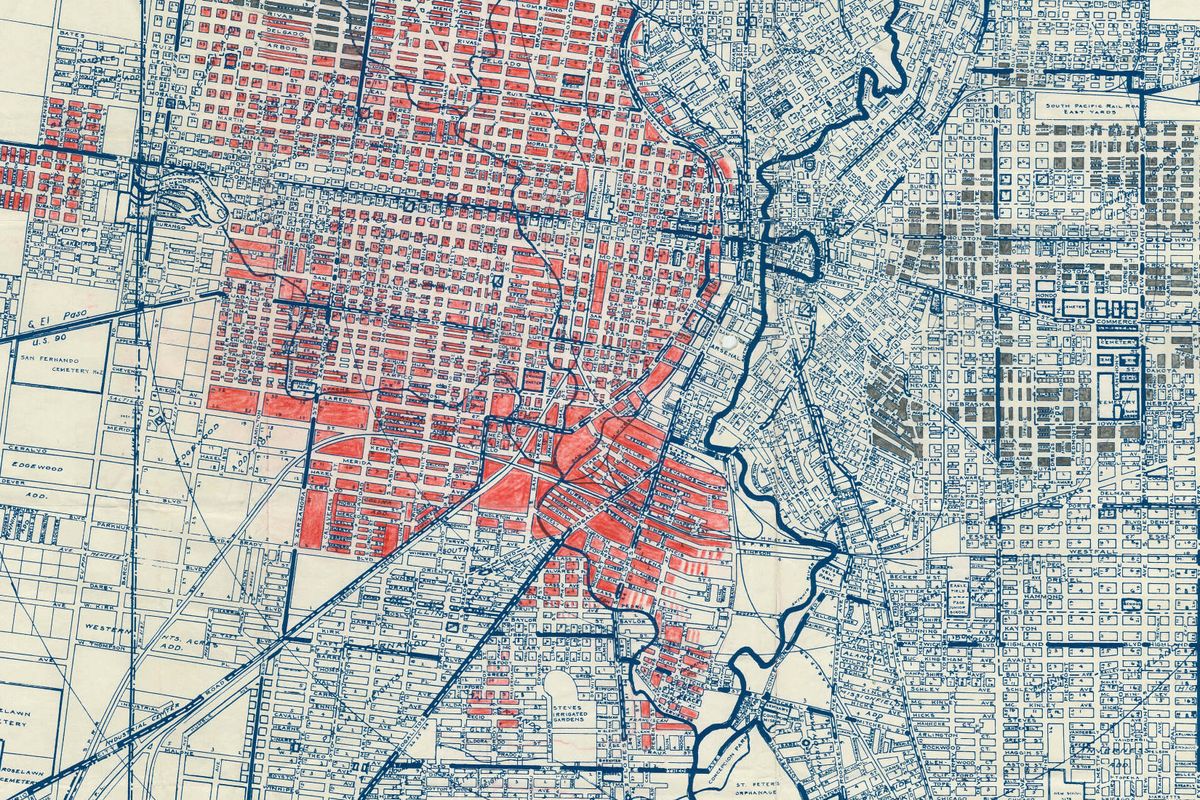
- Unit 4.4: Segregation, Homeownership, and Housing Equity — Examines residential segregation as measured fact, ongoing practice, and policy object. Moves from the federal HOLC security maps — readable in the original through the Mapping Inequality archive — and the evidence of their century-long persistence, to the contemporary mechanisms of race brokering, appraisal devaluation, and eviction, closing on the equity question: what it would take for homeownership to build Black wealth rather than extract it.
The four units map one phenomenon across four domains: the cycle of devaluation, extraction, and profitable return through which racial capitalism organizes American space — and the placemaking through which communities answer it. Together they equip learners to read the places they know as both instruments of a racial order and achievements of the people who made them.