About This Module
Where Module 1 examined how institutions make race, Module 2 assembled the theories for analyzing it, Module 3 traced systemic racism through ostensibly race-neutral systems, Module 4 turned to the ground on which the racial order stands, and Module 5 turned to the movements that contest it, Module 6 turns to the record itself: the archive. This closing module treats the record of the past as a site of power rather than a neutral deposit of what happened, examining four ways that power operates — the silences built into what gets kept, the fragments that survive of lives the record was never meant to hold, the new records communities make where institutions declined to, and the temporal order that decides which pasts count as history at all. Across the four units the module builds a shared vocabulary — archival silence and epistemic injustice, symbolic annihilation and reparative description, the shadow archive and critical fabulation, collective memory and shared authority, chronopolitics and temporal sovereignty — for reading any archive as an argument rather than a given.
The module's organizing argument is that the record of the past is made, not found — and that what is made can be remade. The four units trace a single claim through four layers, each deeper than the last: the silence names the problem, the way power enters at every stage of a record's making; the fragment asks what can responsibly be read from the little that survives; storytelling turns from reading the record to authoring new ones; and time reaches the deepest layer, the calendar itself, which assigns whole peoples to the past or the future before any document is filed. Every unit finds the same doubleness the whole project has traced — a record that harms and a practice that repairs, a silence and its counter-archive, an official clock and a community's own. As the project's close, the module returns learners to where its archives, fragments, and stories have pointed all along: the record of the past is an argument, and so is the calendar, and both belong to those willing to remake them.
Module Objectives
By the end of this module, learners will be able to:
- Explain the module's central premise — that the record of the past is produced rather than given, so that its silences, fragments, and temporalities are sites of power that can be analyzed and contested — and articulate why the archive and the calendar are arguments rather than neutral facts.
- Apply the module's core concepts — archival silence and epistemic injustice, reparative description, critical fabulation and reading along the bias grain, collective memory and shared authority, chronopolitics and temporal sovereignty — to specific historical and contemporary cases.
- Trace a single claim across the module's four layers — the silence built into the record, the fragments that survive it, the new records communities make against it, and the times it keeps — showing how each responds to the record as something made and therefore remakeable.
- Evaluate an intervention — a reparative-description practice, a community archive or oral-history project, a digital reassembly of scattered records, or a community futures practice — for what it can restore or re-author and what remains beyond repair.
The Four Units
The module unfolds across four units, each examining a way that power operates through the record of the past — and the practice that answers it.
- Unit 6.1: Silence, Access, and Epistemic Justice — Opens the module by treating the archive as a site of power: who collects, who catalogs, who is allowed in, and whose lives leave no trace. Pairs Michel-Rolph Trouillot's four moments of silencing with Miranda Fricker's epistemic injustice, extends both into the digital present through Tonia Sutherland, and assembles the repair tradition — community archives against symbolic annihilation, reparative description, and hands-on archival method — anchored by the documented destruction of the 1890 census and a reparative-description audit.
- Unit 6.2: Shadow Archives, Fragments, and the Practice of Diaspora — Asks what scholarship can responsibly do with the fragments the archive of slavery left behind. Pairs Marisa Fuentes's reading along the bias grain with Saidiya Hartman's critical fabulation, follows fragments into material objects with Tiya Miles and into diasporic print culture with Brent Hayes Edwards, and closes with the great digital reassemblies — SlaveVoyages, the Colored Conventions Project, Freedom on the Move — anchored by Ashley's sack and the runaway advertisement read along and against the grain.
- Unit 6.3: Storytelling, Empowerment, and Collective Memory — Takes storytelling — oral history above all — as a method for making the record institutions failed to make, and as a politics. Pairs Alessandro Portelli's claim that memory's "errors" are evidence with Maurice Halbwachs's collective memory, centers the 1969 City College takeover and Open Admissions through CUNY's own archives, adds Sujatha Fernandes's critique of curated stories, and ends with learners recording an oral history of their own.
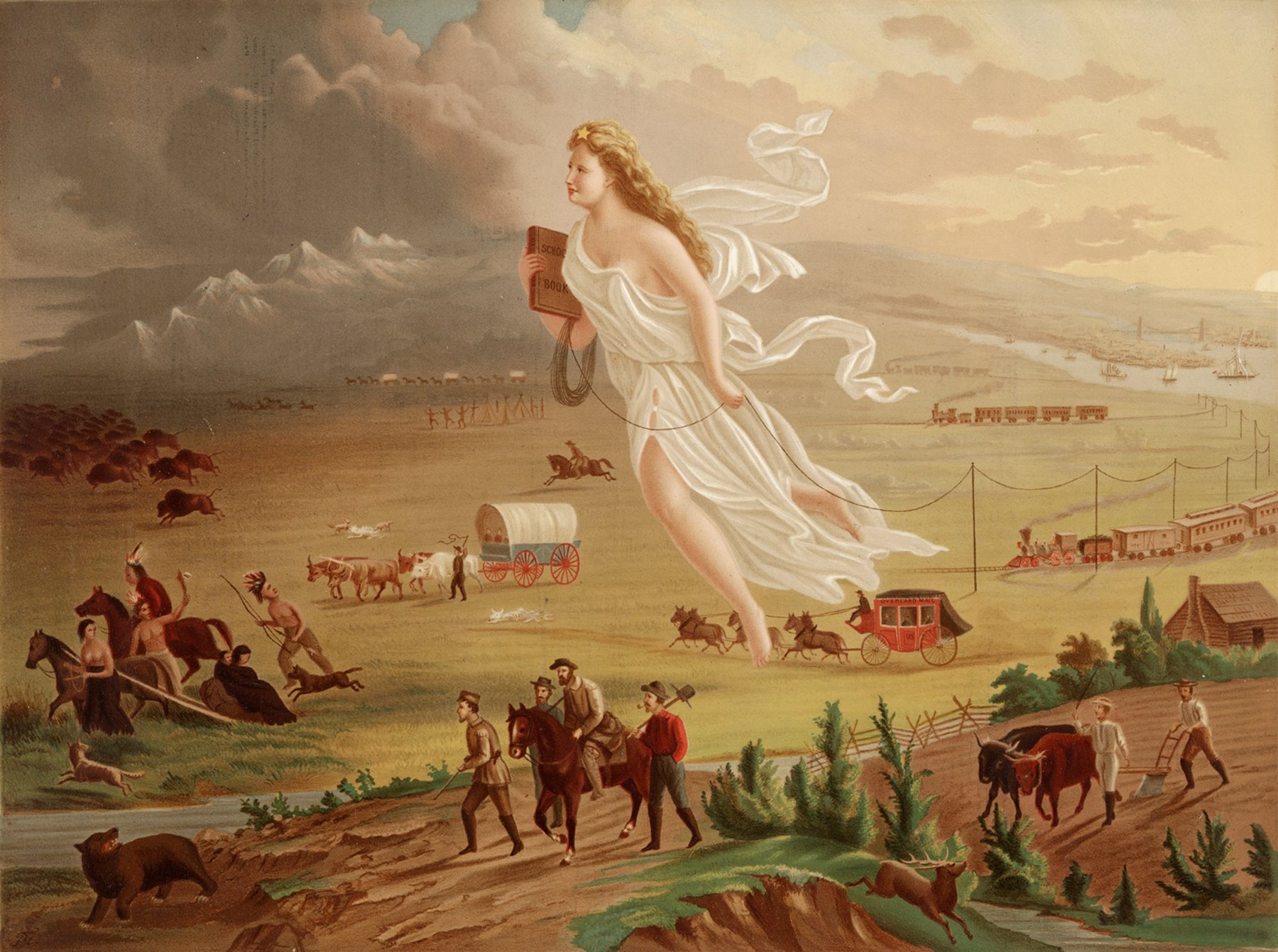
- Unit 6.4: Chronopolitics, Racial Time, and the Critique of American Progress — Closes the project by naming the politics of time. Reads John Gast's American Progress as chronopolitics in pigment, assembles Charles Mills's racial time, Michael Hanchard's Afro-Modernity, and Mark Rifkin's temporal sovereignty against the progress narrative, then turns to the counter-temporalities — Afrofuturism, Kara Keeling's queer and Black cinematic time, Rasheedah Phillips's Black Quantum Futurism — through which the future, and the past, are treated as makeable now.
The four units map one claim across four layers of the record: the silence built into it, the fragments that survive it, the new records communities make against it, and the times it keeps. Together they close the project where its archives, fragments, and stories have been pointing all along — the record of the past is an argument, and so is the calendar, and both can be remade — and equip learners to ask of any archive what it keeps, what it silences, whose telling it holds, and whose clock it runs on.