About This Module
Module 1 establishes the central claim of the entire project: that race in the United States is not a natural fact that institutions merely record, but a category that institutions produce, enforce, and revise. The module assembles the sociological and historical framework that the rest of the course will draw on, treating race as historically constructed and institutionally maintained rather than biologically given or self-evident. It does this not in the abstract but by examining four concrete sites at which the racial order has been built and rebuilt — the category system itself, the eugenic management of reproduction and immigration, the border and the deportation apparatus, and the school. Across these sites the module develops a shared analytical vocabulary — racial formation, racialization, biopolitics, racial scripts, color-blind racism — that learners will carry into the modules that follow.
The module's organizing argument is that the state is a primary maker of race. The census names and renames the population; eugenic law decides whose reproduction is permitted; immigration statute decides who may enter and become a citizen; the school decides who may learn alongside whom and what counts as knowledge worth transmitting. Reading these four institutional sites together, learners come to see that race is continuously made rather than discovered, and that struggles over categories, bodies, borders, and schools are struggles over the racial order itself. By the close of the module, learners should be able to recognize the institutional production of race wherever they encounter it and to bring a precise analytical vocabulary to bear on it.
Module Objectives
By the end of this module, learners will be able to:
- Explain the constructionist premise of the sociology of race — that racial categories are historically produced and institutionally maintained rather than biological or natural — and articulate what is at stake in treating race this way.
- Apply the module's core analytical concepts — racial formation, racialization, biopolitics, racial scripts, and color-blind racism — to specific historical and contemporary cases.
- Trace how distinct state institutions — the census, eugenic and reproductive law, the immigration and deportation regime, and the school — have each functioned as sites at which racial categories are produced, enforced, and revised.
- Read present-day debates over classification, reproduction, immigration, and education as continuations of a long history of institutional racial production rather than as departures from it.
The Four Units
The module unfolds across four units, each addressing a distinct institutional site at which race is made.
- Unit 1.1: The Idea of Race, Ideal Categories, and Sociological Inquiry — Establishes the sociological framework for the project, introducing racial formation and racialization and treating race as historically constructed and institutionally maintained. Uses the U.S. Census and the construction of the Hispanic/Latino category to ground the unit's central concepts.
- Unit 1.2: Eugenics, Biopolitics, and the Making of Citizens — Examines the American eugenics movement and its biopolitical legacies as a site at which race was institutionally produced through the management of bodies. Traces compulsory sterilization, immigration restriction, and reproductive politics, and connects them to contemporary debates over genetics and reproductive justice.
- Unit 1.3: Migration, Borders, and the Politics of Exclusion — Treats U.S. immigration law, bordering, and deportation as institutions through which racial categories are made, ranked, and inscribed in law. Develops the concepts of racial scripts, crimmigration, and the deportation-industrial complex, and attends to settler colonialism as a condition of the immigration frame.
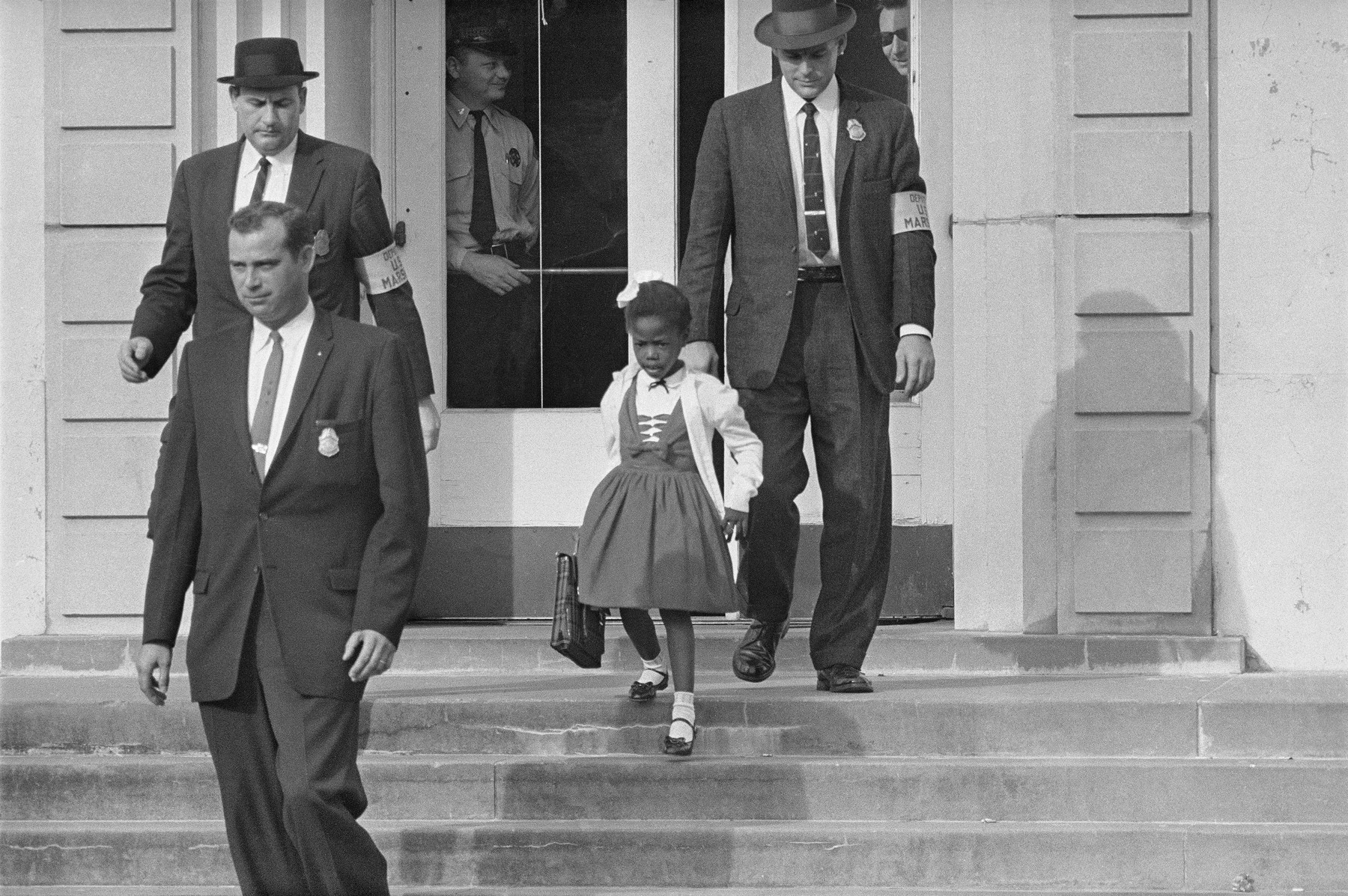
- Unit 1.4: Race, Education, and Nation-Building — Treats the school as an institution where racial categories are produced, contested, and reproduced. Traces an arc from segregation and the Black teaching tradition through Brown v. Board to the contested politics of affirmative action and the 2023 SFFA decision, asking how schooling has functioned as a site of nation-building.
The four units build cumulatively rather than standing apart: each moves the module's central argument — that race is institutionally produced rather than discovered — into a different state institution, from the category system that names the population, through the bodies it manages and the borders it polices, to the schools in which it prepares its citizens.