Introduction
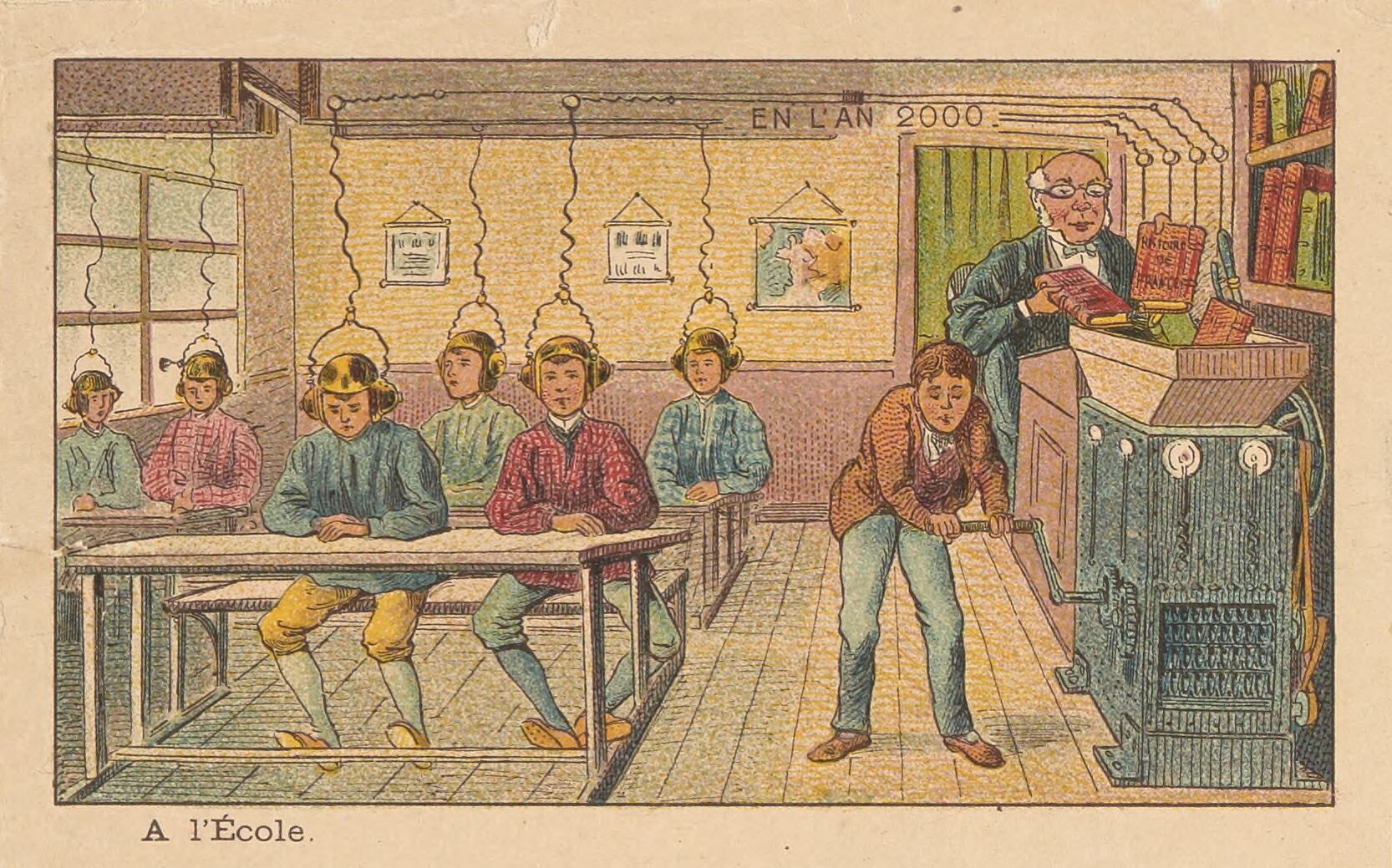
Welcome to The Making of Race. This project gathers pedagogical resources for studying how race has been constructed, contested, and remembered in the United States — from colonial racial taxonomies and the politics of belonging to systemic inequality and racial capitalism, and from the movements that have resisted racism to the archives that shape its memory. Running through all of it is a shared recognition: race is not a natural fact but a historical and social construction, made and remade through specific institutions, laws, and everyday practices.
It grew out of SOCIOLOGY 250: Racial and Ethnic Communities in the United States, taught at Lehman College, CUNY, and is published as an open educational resource on Manifold @CUNY.
What This Course Is About
This course revisits the foundations of race and racism in the United States — their origins, ideologies, materialities, and geographies — in the contexts of conquest and development. More specifically, it explores the relationship between historical processes of racial exclusion in the U.S. and the creation of mechanisms for dispossessing the land and displacing the people who inhabit it. By examining the roots of racism in the doctrine of settlement, "progressive" goals in the pursuit of modernity, and the practice of surveillance in the promise of security, it also seeks to help students engage with theoretical frameworks for understanding the tensions and opportunities within the continuities that sociological concepts and practices draw between the past and present.
What's Inside
The Making of Race is organized into six modules of four units each. Every unit pairs a brief framing essay with curated readings, primary sources, and discussion questions. Alongside the units are forty-eight case studies — standalone, learner-facing exercises built around primary and secondary sources — together with a growing set of learning and teaching resources: sample syllabi, sample assignments, and study guides, as well as student work.
| Modules | 6 |
|---|---|
| Units | 24 |
| Case studies | 48 |
| Cost | Free (zero-cost) |
| License | CC BY-NC-SA 4.0 |
| Platform | Manifold @CUNY |
| Full download | DOI: 10.5281/zenodo.21386222 |
| Level | Undergraduate |
Writing at the Core of Learning
The sample assignments and class activities put writing at the center — not as a formality but as a core practice of thinking. Informed by Lehman College's Writing Across the Curriculum (WAC) program, this course treats writing as scaffolded, step-by-step work: a way to organize ideas, engage sources closely, and reflect on where one stands.
This matters even more amid generative AI. Rather than treat that shift only as a threat, the project leans on what writing does that no tool can do for you — slow down, question, discover, and arrive at your own voice. The challenge is real, and so is the opportunity: to recenter writing as the ground of learning, thinking, and reflection.
How to Use This Project
The Making of Race is designed as an online digital publication — a course free from the usual limits of class hours, credit requirements, and weekly pacing. There is no single path through it. Work through the modules in order, drop into any unit that interests you, or use the case studies and discussion guides entirely on their own. Follow your curiosity, set your own pace, and take what is useful.
However you arrive, there is a place for you here — whether you are:
- building or sustaining a community around these questions,
- teaching a full course or a single session,
- learning on your own, or
- simply here to explore a theme or topic.
Because everything is openly licensed, you are free not only to read these materials but to adapt and remix them for your own purposes. As an open educational resource, this project is open for anyone to explore, take apart, and build on. Making it open, and making it easy to remix, is part of a broader commitment to open digital pedagogy.
Accessibility
Accessibility is treated here as ongoing work rather than a finished box to check. The materials are built to be readable and navigable — clear heading structure, descriptive links, and alternative text for images — and that effort continues as the project grows. Learners come with different needs and use these materials in different ways, so the project is meant to bend to individual use: read on the platform, resize or reflow the text, work on a phone, or download the files and adapt them into whatever format serves you best.
With Manifold and Beyond
There are two broad ways to engage with The Making of Race, and you can move between them freely.
Read it on Manifold. The platform is built for active, social reading: annotate as you go, highlight and keep private notes, form or join a reading group to annotate together, and read comfortably on a phone or tablet.
Or take it with you. The entire project can be downloaded as a single package from its Zenodo repository — yours to keep, print, or remix for another setting.
A Note on the Content
This course engages directly with painful and challenging histories — slavery and its afterlives, dispossession and displacement, coerced sterilization, racial violence, and the machinery of exclusion. It does not look away from them, and it does not treat them as settled or bygone in the past. Some of the material will be hard to sit with. That difficulty is part of the work: these pages ask you to look carefully, to weigh what you are reading, and to bring your own perspectives and care to it — at whatever pace you need.
An Ongoing Conversation
The topics gathered here are not the last word on anything. They are a beginning — an invitation into questions that remain open, and that history keeps relevant. This project is curated as such for us to think, to reflect, and even to talk back, and, if you are moved to, to write. Use it to organize your own thinking and to keep going. The conversation is continuing, and you are part of it.
That invitation extends to the practice itself. This project exists in part because openly licensed, up-to-date materials on race and racism remain scarce — a gap I came to see clearly during the Open Knowledge Fellowship at the Mina Rees Library, and one I reflect on in Teaching "Race and Gender Ideologies" in the Resurgence of American Fascist Movements. That fellowship also produced an earlier zero-cost version of the course syllabus, built around open educational resources and published on CUNY Academic Works in Winter 2026. Making an open educational resource is neither neutral nor automatic; it takes deliberate effort, and it matters most as sharing and teaching these subjects meet new pressure. So take this as a second invitation: to recognize the value of open education and to be proactive in it — reuse and remix what you find here, make and share your own, and keep open teaching and learning alive as a practice, building on the ongoing conversations.